Search This Blog

Thursday, 23 April 2020

Review: Alpkit Squalline windproof jacket


Packable protection from the elements

While the worst of Winter weather is now hopefully just a distant memory, it still pays to be prepared. Early morning mist, April showers and fast descents can all chill you to the bone if you are in the wrong kit. Alpkit’s Squalline jacket is designed to provide protection without the usual bulk of a full on winter jacket.

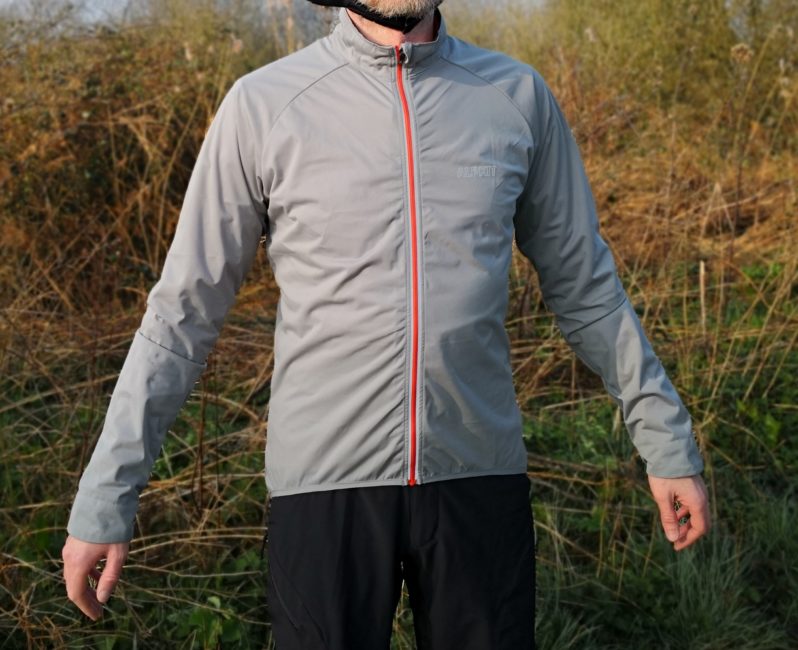
The first thing you notice is that the Squalline is not your typical crisp packet stiff, rustly, shell jacket. It is soft to the touch and very stretchy. There is no restriction when getting down into the drops, or hefting your bike over a gate. It is not until you unzip it and examine the inner face of the material that you can see it is water resistant.

Fit

The Squalline has relaxed but not baggy cut. The sleeves did not ride up when on the drops, and the double cuff design pairs up well with gloves to keep the damp and draughts at bay.

Your base layer and winter jersey will fit easily under the Squalline without it being stretched tight. The drop tail is big enough to cover loaded jersey pockets and overlap the small of your back.

On the bike

The double cuffed sleeves and high neck combine to keep the elements out. When it does warm up, the zip is easy to undo one handed. There is none of that needing to use your teeth business fighting a stiff zip!

The large zip garage means no painful beard or chin nipping either!

A mesh vent across the shoulder blades helps to prevent overheating. It also keeps that boil in the bag feeling at bay.

There are no front pockets, instead there is a zipped rear pocket for essentials. This pocket doubles up as a storage bag and makes it easy to store the jacket in your jersey pocket or frame bag.

The steel grey colour has resisted mud staining and provides a contrast from the scenery without being shouty like some fluro colours. There are reflective details on the front and rear to get you noticed in the dark.

Wet weather performance

For a jacket that is sold as weather resistant rather than waterproof, it performs remarkably well. For it’s first wet outing I took a full-on rain shell as back up, but despite persistent showers, never felt the need to change as it was doing a great job of keeping me dry.

Summing up

With the Summer approaching I can see the Squalline being the go-to shell. Being light, breathable and able to keep out all but the worst downpour, it will keep you dry and comfortable without weighing you down.

Review: Fizik Terra Microtex Bondcush Tacky handlebar tape


With the Covid-19 restricting big rides, take advantage of the good weather and give your bike some  long overdue TLC. Handlebar tape is a crucial contact point but often suffers from cost-cutting on new bikes. Follow any bike mechanic on instagram and before long an image tagged #bikeshophorrors crops up showing the grim evidence of sweaty hands!

Terra Bond-what?

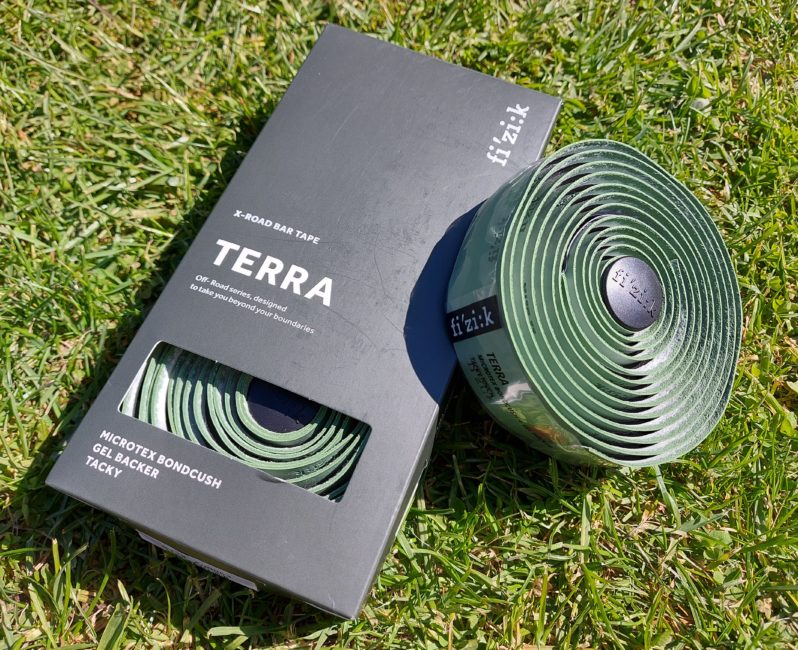
You expect a funky product with a name like Fizik Terra Microtex Bondcush Tacky. Fizik explain the lengthy name like so. Terra means it’s tape for off-road drop bars. Bondcush is the name for the cushioned padding bonded to the outer layer. Finally we are left with Tacky, not because of any garish colours but because the Microtex outer layer is grippy. Speaking of colours, the Terra tape is available in six colours, including black so you’ll find a shade to suit whatever you ride. The Challenger Tank green of our test tape is ‘green blue’ apparently. With a retail price of £31.99 it’s clearly at the upper end of the scale so it had better be good!

Fitting

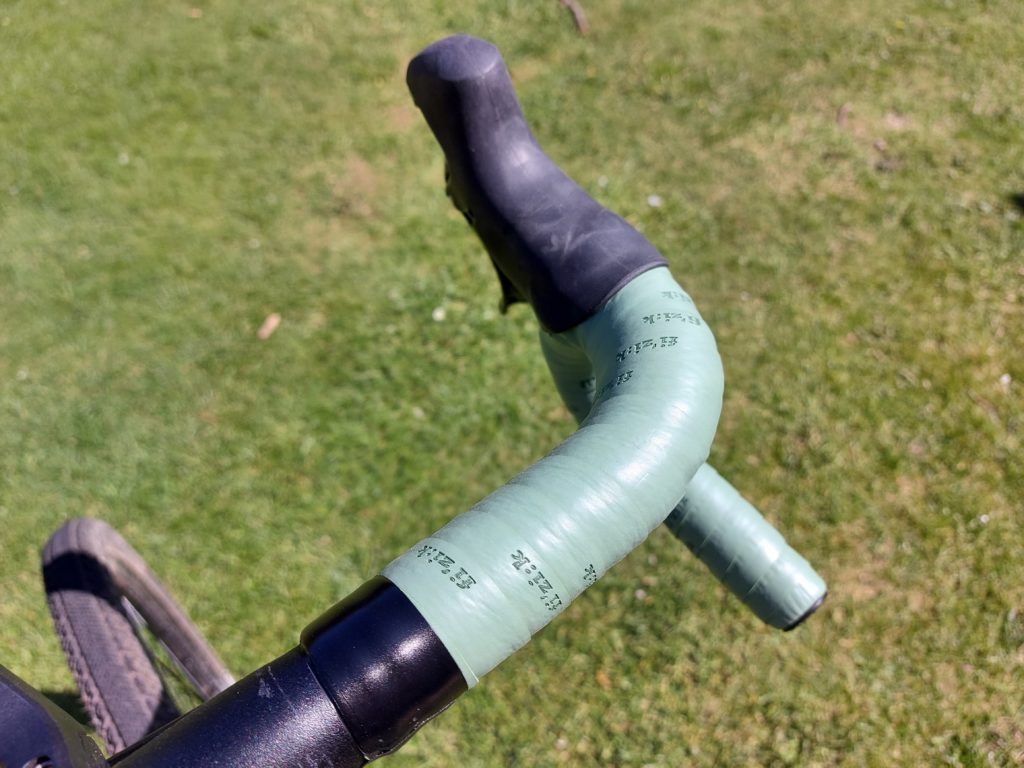
When fitting the Fizik Terra tape you have a couple of options. The tape has both recessed logos and black printed logos on it. I opted for the more subtle recessed branding. While the tape does have a pull-off backing strip, the adhesive is actually a silicone strip rather than actual glue. Getting started is tricky but with a couple of decent wraps it holds solid. It also has the advantage of allowing you to reposition the tape without losing grip when you are eventually happy.

Ah, repositioning tape. I’m happy to confess that I’m not a natural when it comes to wrapping tape. In fact I gave the Fi’zi:k how-to video a few watches before starting. Naturally the pro in the video can slap on tape perfectly while simultaneously completing The Times crossword. I found the Fizik Terra tape a real mission to fit and was saved numerous times by the gel-backing. But, and it’s a big but, when I had eventually finished I was very happy with the result.

While the lack of stretch in the tape made it tricky to wrap neatly around the curves it paid dividends elsewhere. The tape’s strength meant that I could pull it really tight without the tape thinning-out and looking uneven or bumpy. Additional bonus points go to Fi’zi:k for supplying finishing tape that was actually capable of sticking to itself.

Fizik Terra Bondcush Bar Tape

It had us in the first half, not gonna lie!

Summary

There’s no doubting that Fizik’s Terra tape is both an expensive option and tricky to fit. It does however reward those with patience by being supremely grippy and comfortable. At 3mm thick it’s Fizik’s thickest tape but doesn’t feel bulky like some.


My only real complaint is that there aren’t enough logos on the tape. Not because I want to broadcast that I’ve got flash bartape, but because the random spacing looks a bit uneven! If you’re champing at the bit to get out, rest a while and treat yourself to some Terra tape. It’ll be perfect for those long hot summer rides we’re all looking forward to!

Monday, 20 April 2020

Review: ISSI II Triple SPD compatible clipless pedals


Introduction

iSSi Pedals are a part of the QBP empire that also includes the Salsa & Surly brands. They offer both clipless and flat pedals for gravel, MTB and road use. As well as the wide range of colours (a novelty for clipless pedals) they also offer pedals with different axle lengths. This allows riders to fine tune their q-factor.

The pedals we have on test are the II Triples. The triple tag denoting that they run on a triple set of sealed bearings. With increasing numbers of pedals employing DU bushings instead of bearings, this is a welcome spec choice. Despite the CroMo axle and triple bearings, their compact size and allow body keeps the weight down to 300g a pair. This undercuts a number of typical rivals.

None more black…

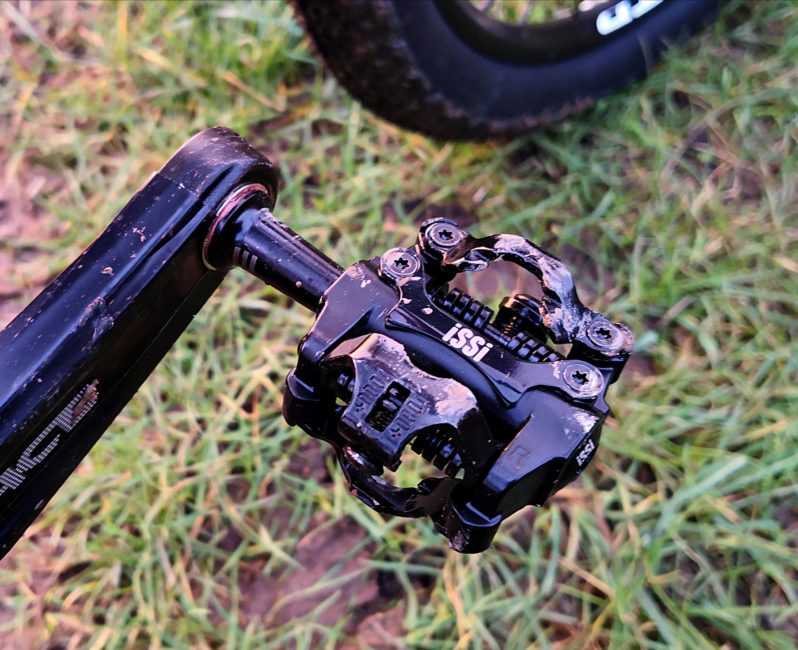
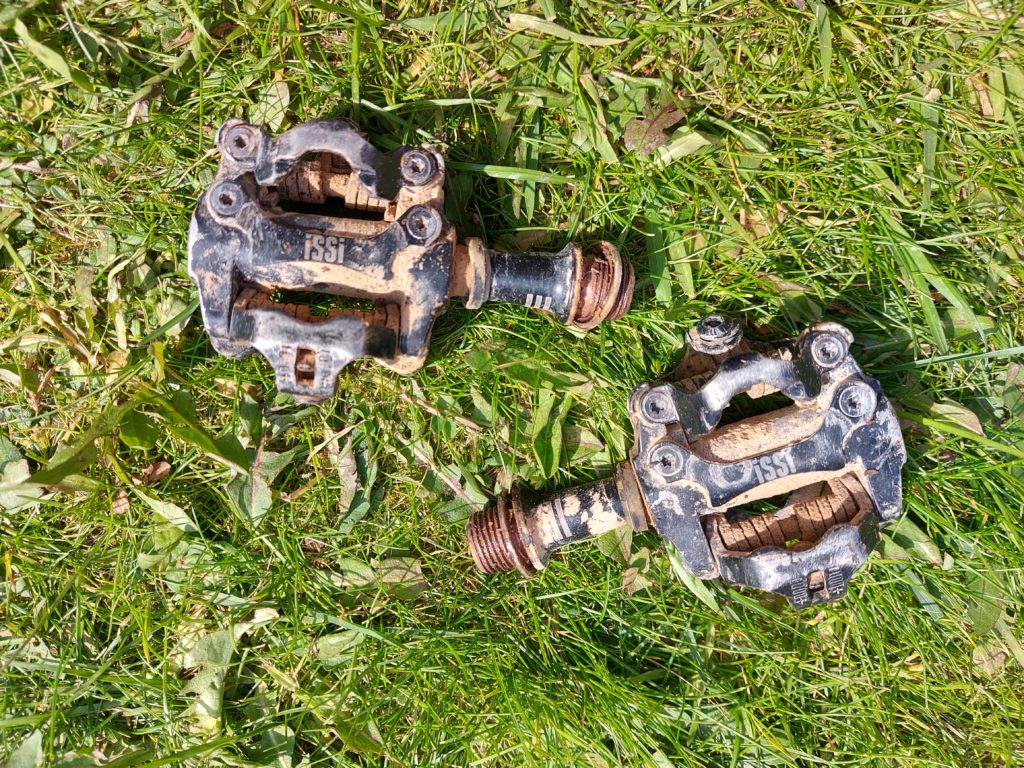
The clipless mechanism employed by iSSi is Shimano SPD compatible. The cleats, and how the pedals operate, will be familiar to anyone who has used SPDs before. There are no spanner flats on the axles so make sure you have a beefy set of hex keys to fit them! While their settings don’t go up to eleven, everything bar some subtle branding is finished in black. There are three stripes on the axle to remind you that you’ve got triple bearings.

iSSi pedals

Quite a lot of Morocco came back in the pedals!

On the bike

Fresh out of the box the iSSi’s rotated smoothly and the clipless action has just enough clunk to let you know you’re secured. The supplied cleats are to all intents and purposes identical in appearance to the original Shimano design.

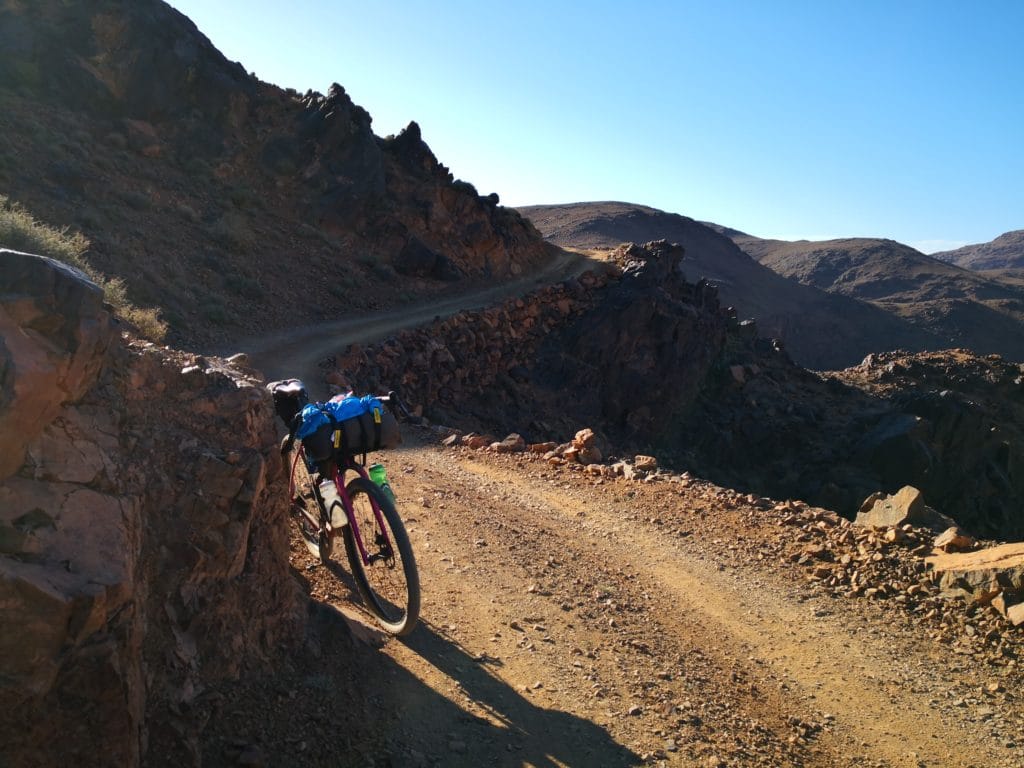
In typical UK winter weather the iSSi’s worked as well as any SPD pedal I’ve used. For a change of scenery and conditions the iSSi pedals were also fitted to my Cutthroat for the Atlas Mountain Race. Inevitably as the miles wore on, the black finish wore off the bodies and mechanism. More of a concern was their performance in the desert. On more than one occasion the fine dust caused the pedals to jam leaving me to fall like the proverbial sack of spuds! I had immediate flashbacks to my first SPDs back in the 90’s!

Obviously desert sand won’t be a massive issue back here in the UK, but the last thing a tired rider wants is the anxiety of whether they can unclip. To solve the issue I got into the habit of regularly flushing the pedals with water, less than ideal when reserves are low in a desert!

Another mark against the pedals was that the rubber seal between the axle and the body refused to stay put. After pushing it back a few times I simply gave up bothering. The bearings don’t seem to have suffered so after a thorough clean I’ve put in a dab of grease to help the seal, and used a cable tie to prevent the seal creeping back out again.

Conclusion

In their favour the iSSi pedals are smart looking, lightweight and in certain conditions have a smooth clipless action. While I haven’t ridden in Morocco before, there are numerous desert stages on the Tour Divide and I’ve never experienced a pair of pedals jam up quite so frequently. The rubber seals inability to stay put didn’t cause any issues in the bone dry conditions of Morocco but their long term prospects in the UK can’t be good. The cable-tie is holding up but I fear it’ll eventually chew the seal up as the pedal rotates.

It’s difficult to recommend these pedals over a Shimano offering. iSSi have replaced the II with the Trail model so it could be they’ve dealt with these issues.

Tuesday, 14 April 2020

Review: Straight Cut Design Custom Framebag


There are seemingly endless options for bike packing luggage, but one area is often less than perfect, namely frame bags. Seat packs and bar-bags can be adjusted to fit most bikes, but frame bags are more problematic. Most brands therefore make do with half-frame designs to improve compatibility. Having just added a Salsa Cutthroat to my fleet I needed to source a frame bag for the Atlas Mountain Race. One of the Cutty’s key features is a front triangle designed for a direct-mount bolt on bag. The triangle itself is also shaped to maximise the size of bag that can be fitted. Salsa themselves have a range of framebags, but they aren’t available yet. This left me with a dilemma, it would be a shame to waste the space with a generic bag.

As I was going to use a seat-pack and handlebar harness from Straight Cut Design, I got in touch with Ross and asked if he fancied a challenge. Alongside their range of off the peg luggage, Straight Cut Design also produce custom pieces.  Which it turns out includes direct-mount bags. The hardest part was going to be deciding which of the numerous options to go for!
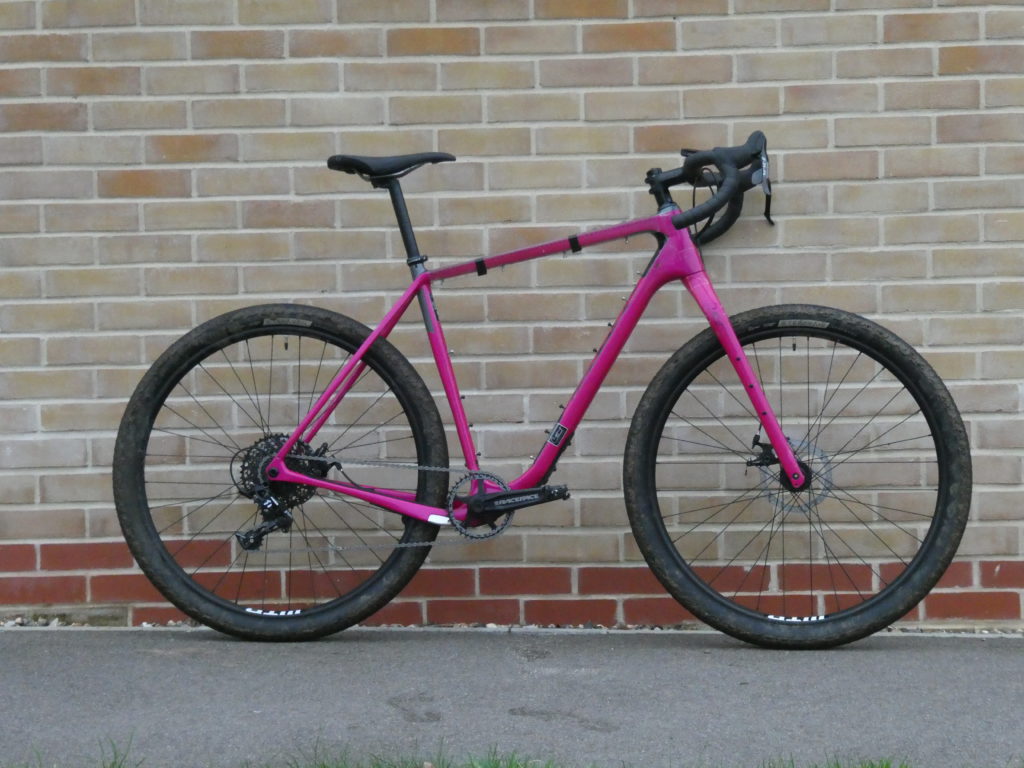
Salsa Cutthroat V2

Setting the wheels in motion

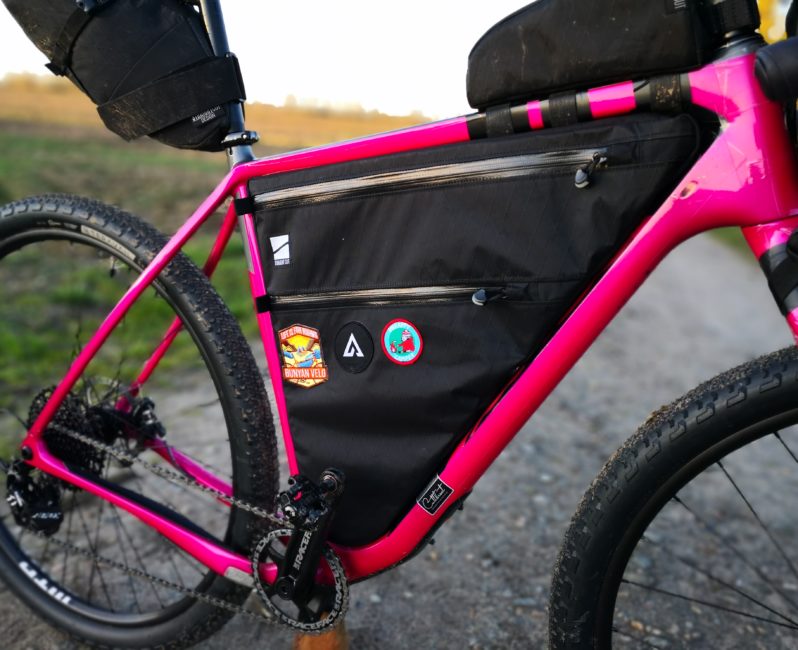
The process for ordering a bag is quite simple and outlined on the Straight Cut webpage. Having decided on the bag fabric and style, the next step was to take a side on photo of the Salsa Cutthroat with a ruler taped to the frame for scale. I emailed the images and details to Ross and let him work his magic. When the parcel from north of the border arrived, the contents surpassed my already high expectations. I could tell it was a quality product just lifting it out of the box. The first thing I noticed were my patches from various events, sewn on as part of the service with custom bags.
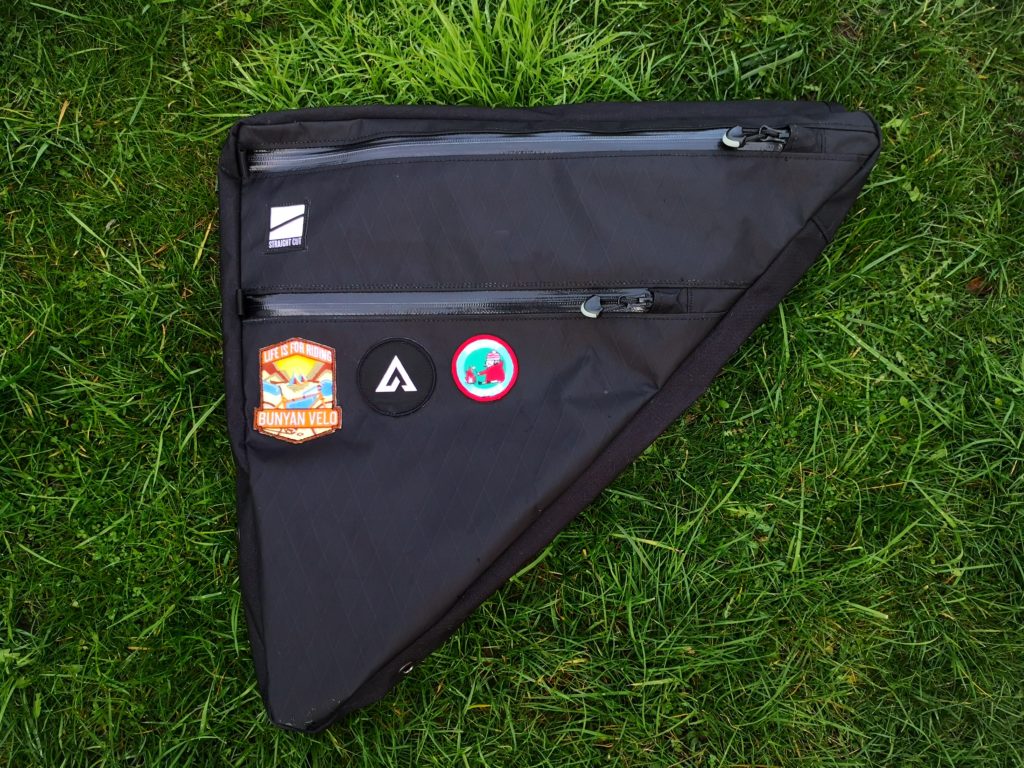
Straight Cut Design custom frame bag

Drive-side has the zips for the main compartments, the zip-pulls had a surprise feature!

On the drive-side you can see two YKK Aquaguard zips, these give access to the two main compartments. It took my first night ride in Morocco to realise the zipper-pulls glowed in the dark! Handy considering the trouble I had with lights on that event!
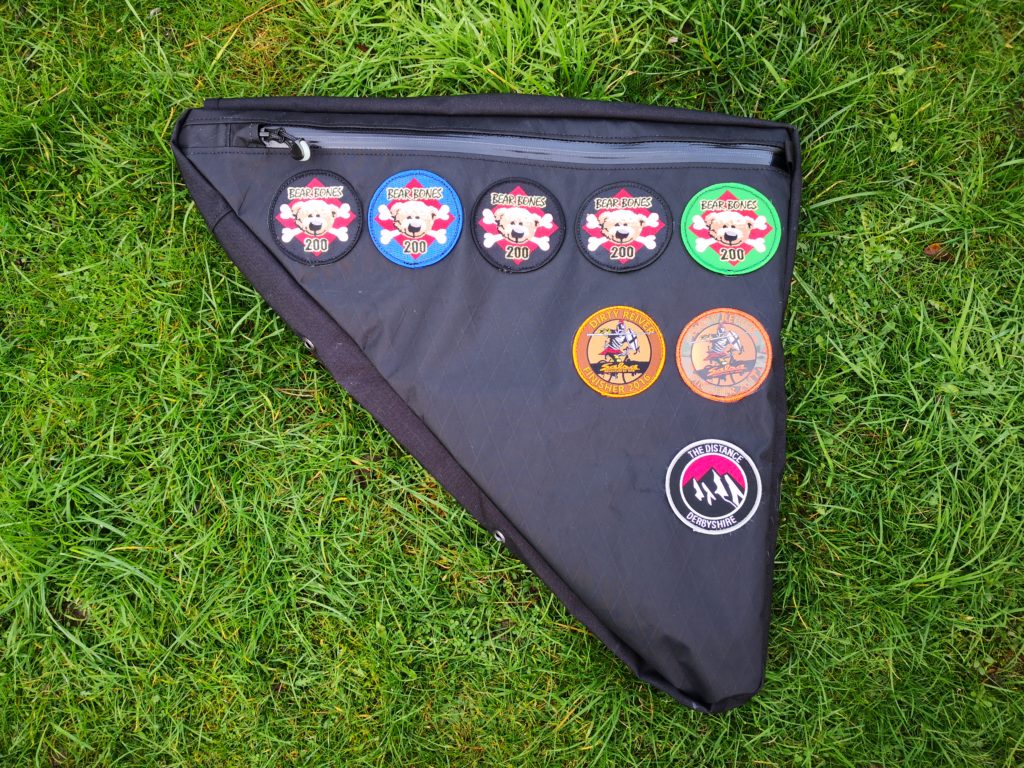
All the adventure patches

The non-drive with its single compartment and ample real estate for patches!

Fitting

The bag is kept rigid with three drilled plastic stiffeners and steel washers. When offered up the bag slotted in perfectly, it was simply a case of threading in each M5 bolt by hand and then working my way around gradually tightening each one.
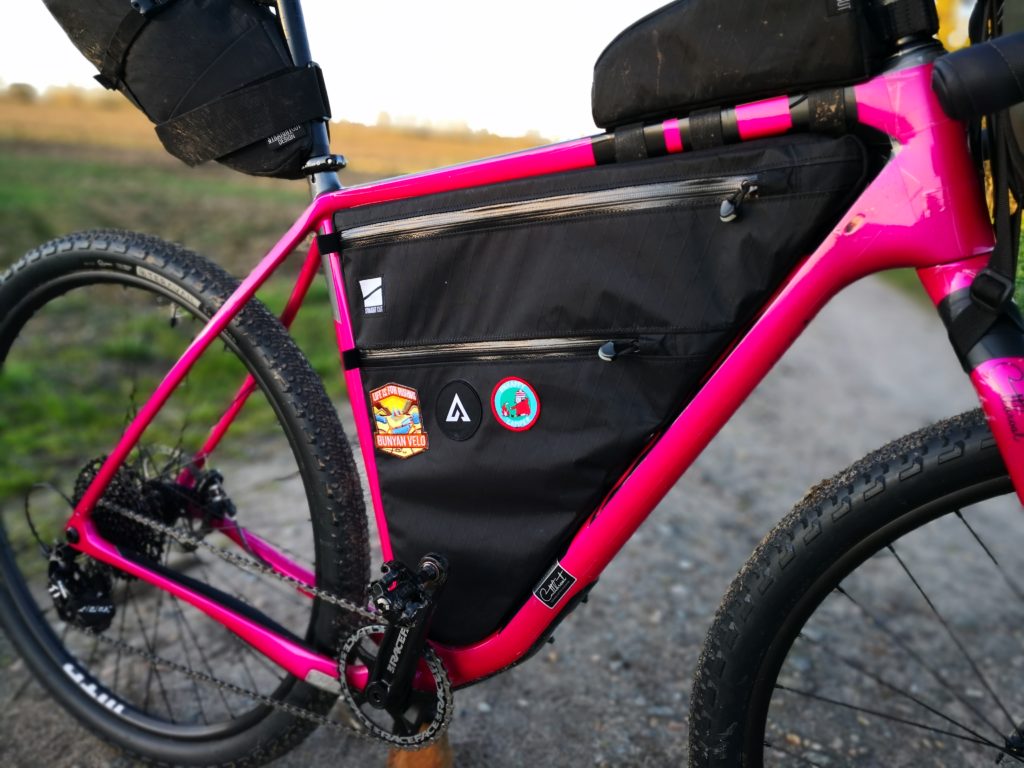
Straight Cut Design custom frame bag fitted to Salsa Cutthroat V2

Literally made to measure, a perfect fit!

I opted to have the main compartment divided into two. I asked Ross to make the top compartment deeper than normal so that I could fit more food and water in. As standard the bags come with a hose-port so I could store a larger water bladder if necessary. It also makes running battery cables to your lights and GPS a breeze.
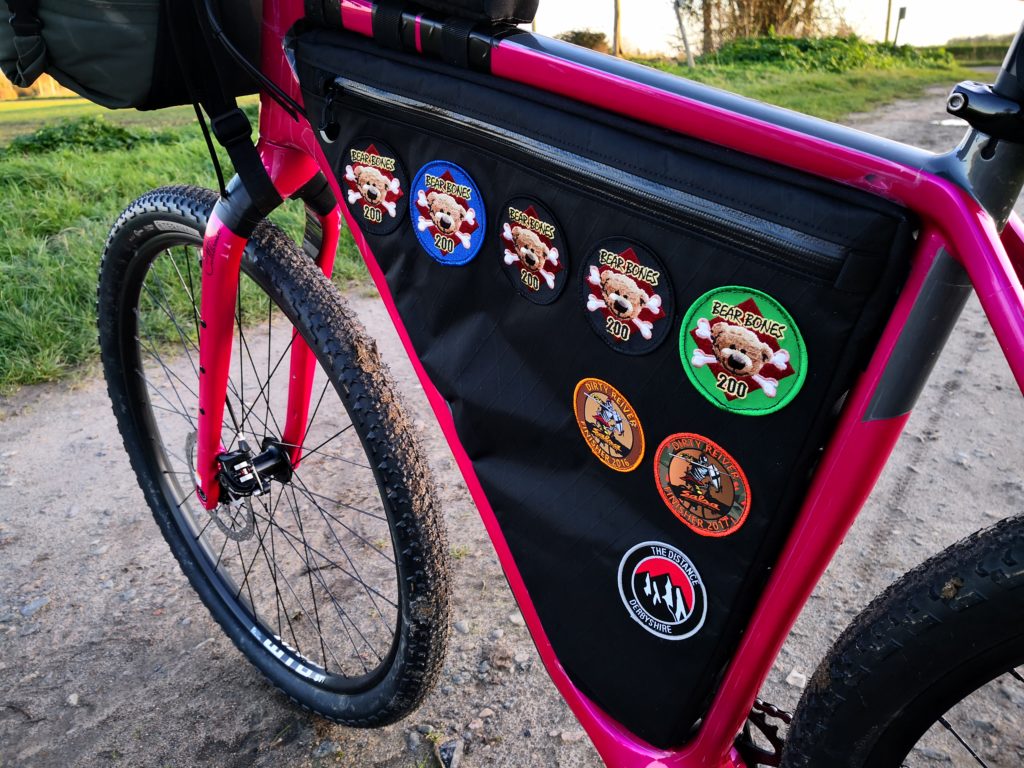
Salsa Cutthroat custom framebag

It’s going to be difficult to get another event patch in 2020…

Design features

On the non-drive side I opted for the additional small pocket. I find these great for tarp poles & pegs, or if racing, for keeping pump and puncture repair kit immediately to hand. For the fabric, I chose plain black VX21 for the side panels & black cordura for the contact panels.
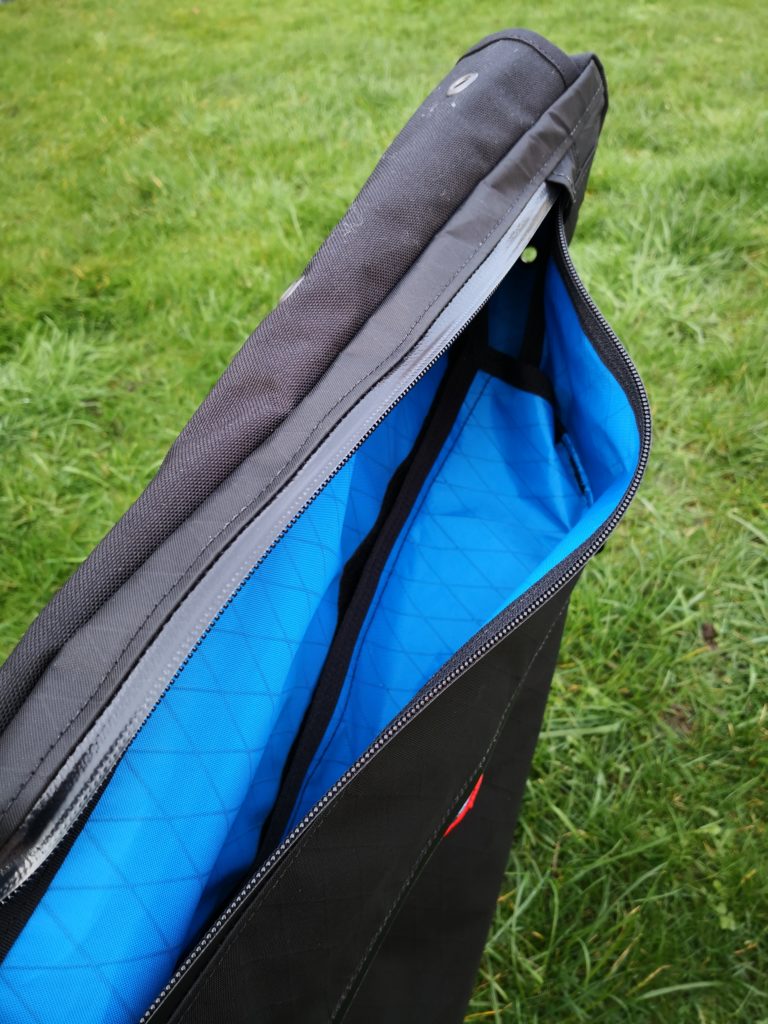
Straight Cut Design interior view of the bag

Drive-side top compartment, note the eyeletted bolt holes

A blue liner contrasts the black and makes searching the contents easier. While resisting dirt, leaky chain-lube bottles and the like better than a lighter colour.  The hole you see is one of the eyeletted bolt holes. There’s also a drain-hole at the very bottom of the bag should a drinks container, etc. leak.
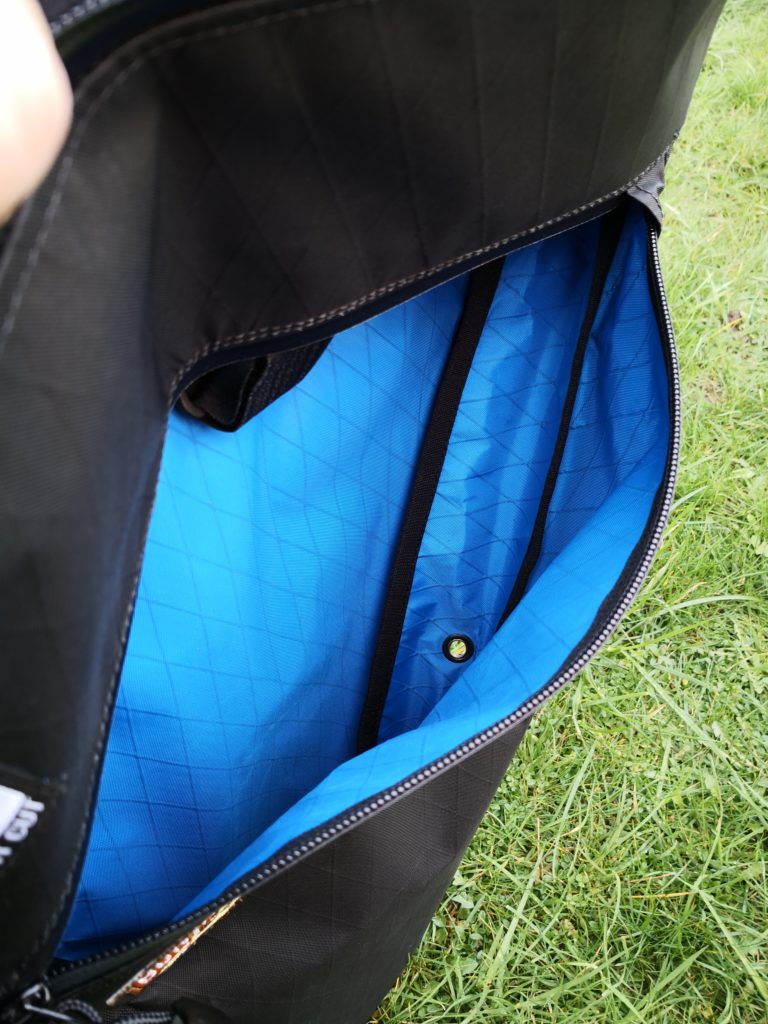
frame bag drainage hole

The cavernous lower compartment!

Pull at the corner of the top section and it folds away so you can use the frame-bag as one very large compartment. Velcro straps stop the centre of the bag bulging out and rubbing while you pedal.
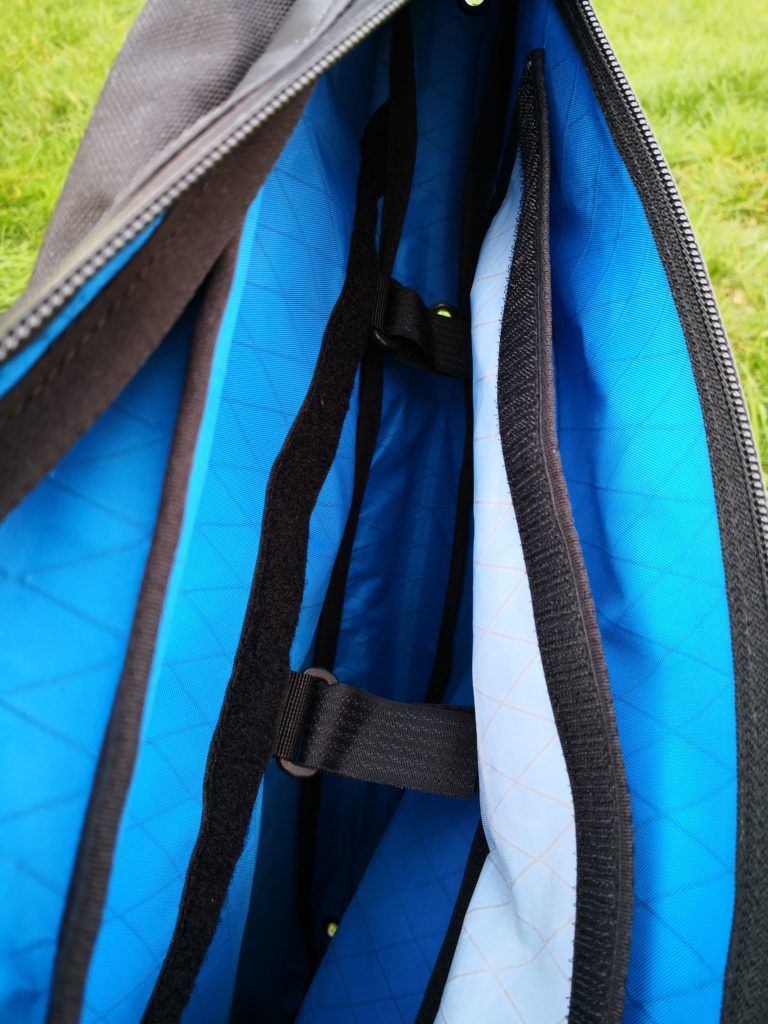
frame bag details

Need to fit a scale model of the Eiffel Tower in? No problemo!

On the bike

Straight after fitment I crammed the frame-bag with essential kit for the Atlas Mountain Race. The combination of the Salsa’s big triangle and Straight Cut Design’s craftsmanship made for a superb load lugging experience. The lower compartment swallowed up my emergency items, namely tool roll, spare parts, tubes and first aid kit. In the top went all the frequently used essentials, food, batteries, head torch and the like. With supply points few and far between I used every square inch for food. It’s a testament to the quality build and materials that no zips or seams burst despite rough treatment. An added bonus for the weary and fractious rider was the lack of annoying niggles. With no velcro and a rigid design, even when stuffed full the bag didn’t brush on my legs or cranks, or pluck at my shorts. It also meant the Cutty’s paintwork didn’t suffer from the usual rubbing from straps. At the end of the AMR, the bag looked decidedly second hand, caked as it was in dust, mud and suncream. But in five minutes, I undid a handful of bolts, rinsed it under the hose and it’s as good as new.

Summary

If you’re in the market for a frame bag then Straight Cut Design should definitely be on your list for consideration. The quality of materials and construction matches any frame bag I’ve used and outclasses off the peg options. By going custom you’ll get a product that fits perfectly and has all the features that you want.
Thursday, 2 April 2020

Review: Wraptie tie-down straps


Getting out there on your bike inevitably means taking some kit with you. The challenge comes in finding ways to carry it all. While soft luggage has all but replaced racks and panniers but it’s not perfect. One downside to minimalism is reduced convenience and capacity. Often you need to cram a bit more in or access something frequently. Voile straps are a popular solution (see our test HERE) and Wraptie seek to offer an alternative method of strapping your kit together.

Wraptie

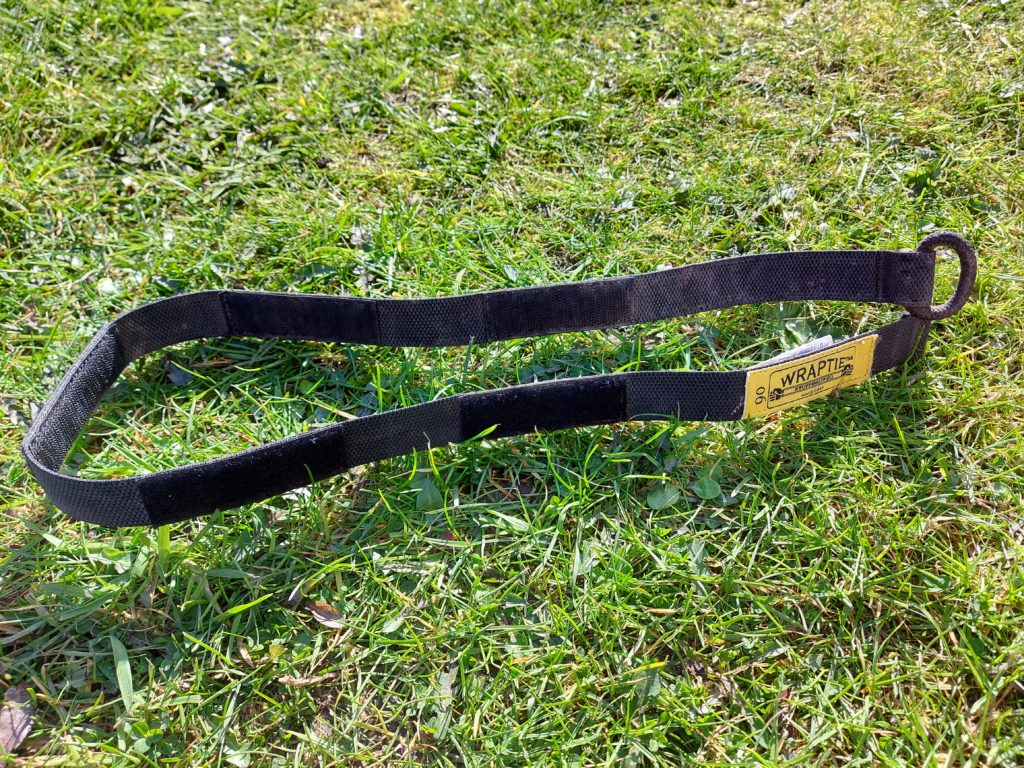
Another one of those “why didn’t I think of that” products!

Wraptie are made from a very strong elastic (rated to 50kg) which have sections of velcro stitched on. The rough and fluffy velcro sections are on opposite sides of the strap. The spacing of the strips allows the Wraptie to stretch, and then the velcro holds it in place. Kudos to Wraptie for using 100% recycled materials and keeping waste plastic out of landfill. Available in four sizes ranging from 90cm to 240cm this review is focussed mainly on the shortest ones as they are of most use to cyclists.

Wraptie in action

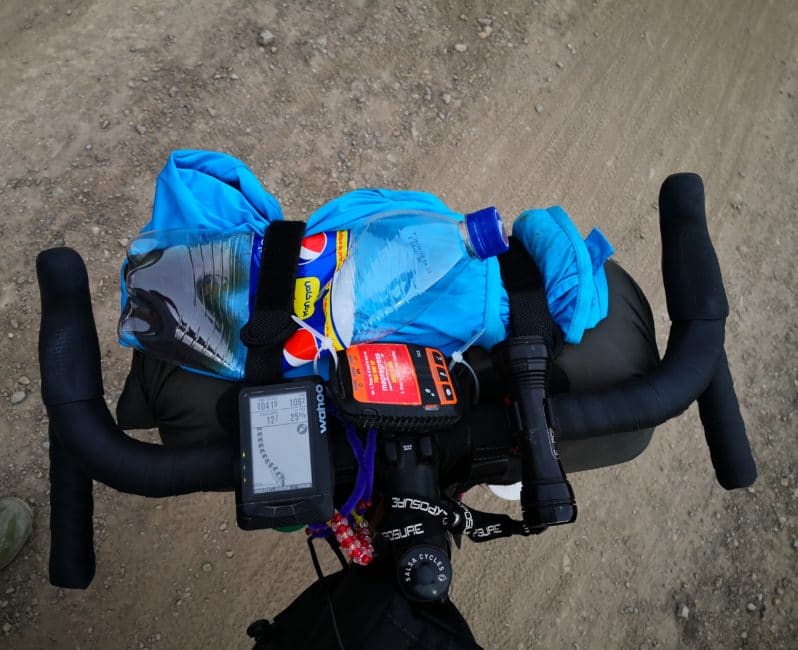
Over a thousand kilometres and no jettisoned kit!

On the bike

Wraptie provided us with two sets, 90cm for on the bike and 240cm for use inside vehicles. I took the 90cm pair on the Atlas Mountain Race where I have to say they proved invaluable. As you can see in the photo I looped them around my front harness to hold my Gilet. This kept it immediately to hand when needed to keep the chill off on descents. The elastic nature, combined with the velcro allowed nearly infinite adjustment. This was perfect for additional hydration and kept weight off my back. If you have a seat-pack that extends a past your saddle it can perform a similar role there.

Wraptie in the desert

Grabbing a quick breather before donning the gilet and hitting warpspeed on the way down!

In the van

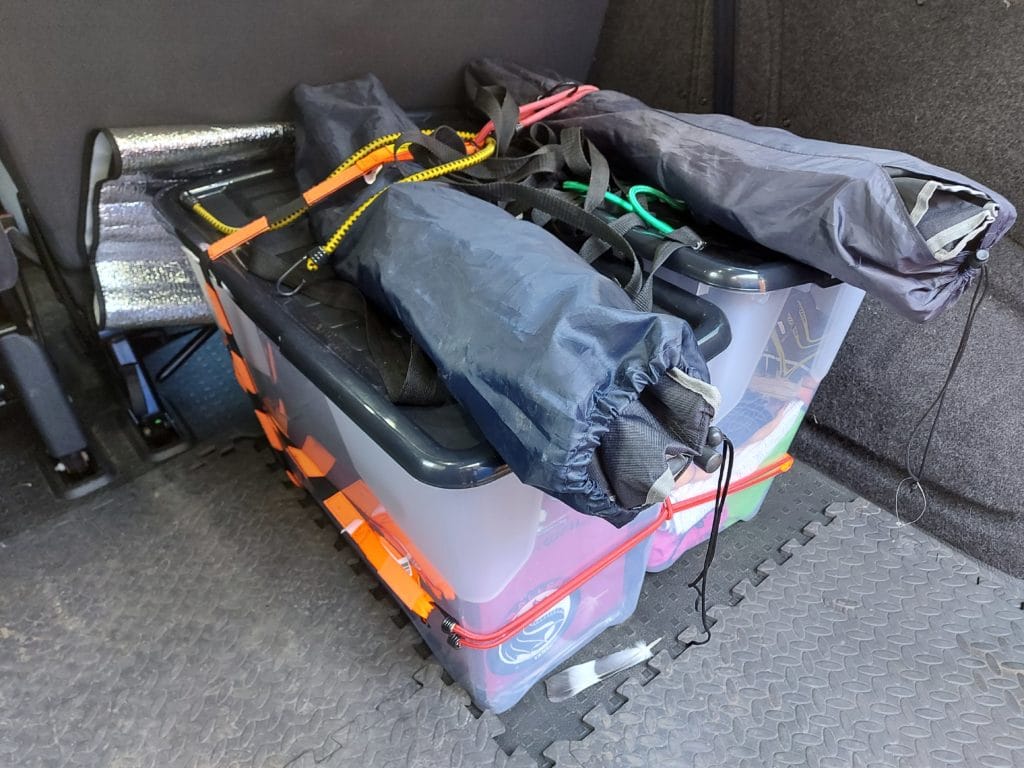
It was a similar story when using the longer versions in the van. I used to use a variety of ratchet straps and bungies to keep my tools, spares and camping kit from rolling about. The ratchets are secure but a faff, and there was always the risk of losing an eye from a stray bungie! With the Wraptie I just need to pull them tight enough to  hold the load, rest the two halves of the velcro together and it’s job jobbed! Looped around your bars and saddle, bike can be held in place without the risk of buckles or hooks chipping the paint.

Other uses off the bike

There’s a Wraptie out there to secure almost anything, including the kitchen sink!

Summary

Like all good ideas, Wraptie are simple and effective. In addition you can use the velcro to daisy-chain them if you need to join two or more. The only real downside is that the velcro could pluck at, or roughen certain fabrics. Retailing at £15.25 a pair they compare favourably price-wise with similar sized Voile straps. When rolled up the 90cm straps are lighter and smaller than a Mars bar. There’s little reason then not to pack a couple for emergency use!

Monday, 30 March 2020

Review: Tru-Tension Bananaslip Tungsten Chain Lubes


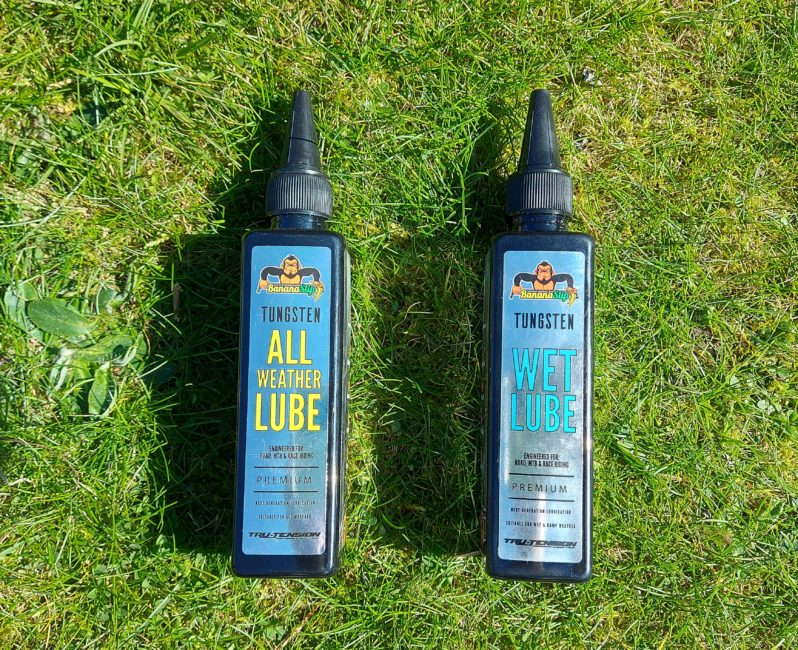
Tru-Tension maybe newcomers to the scene but have a wide range of lubricants and cleaning products for both bicycles and motorcycles. The lubes we have had in for testing are their middle-tier. Below are standard All-Weather & Wet conditions lubes and above is the Race Lube, also bearing the Tungsten branding.

On the tip of my…

The Tungsten referenced in the product name is Tungsten Disulphide. A new component in bicycle lubes but one that has a long history in Aeronautical and Space applications. First used on the Mariner Space Program, Tungsten Disulphide has proven it’s worth protecting spacecraft in extremes of temperature (-273 to +300°c), shock and vibration.

That’s all well and good but how does it deal with the harshest conditions known to man, a Welsh winter? Outside of a laboratory, the real world has so many variables it’s impossible for us to provide you with any empirical test data, but we will give you our impressions on how these lubes performed.

All-weather all-star

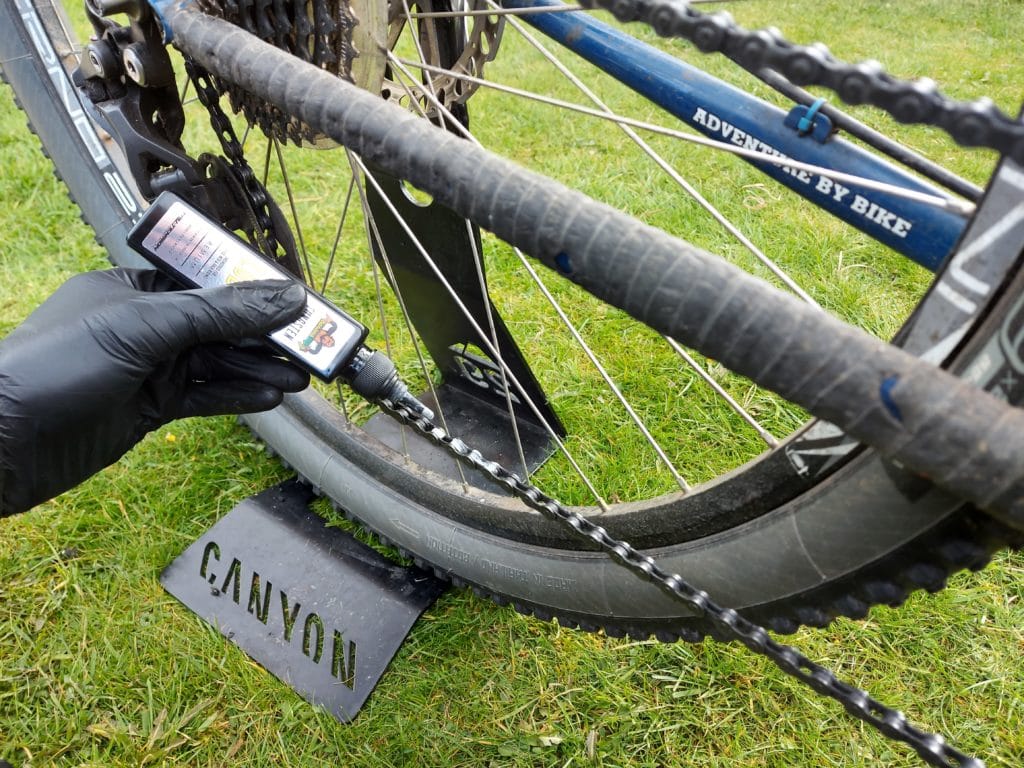
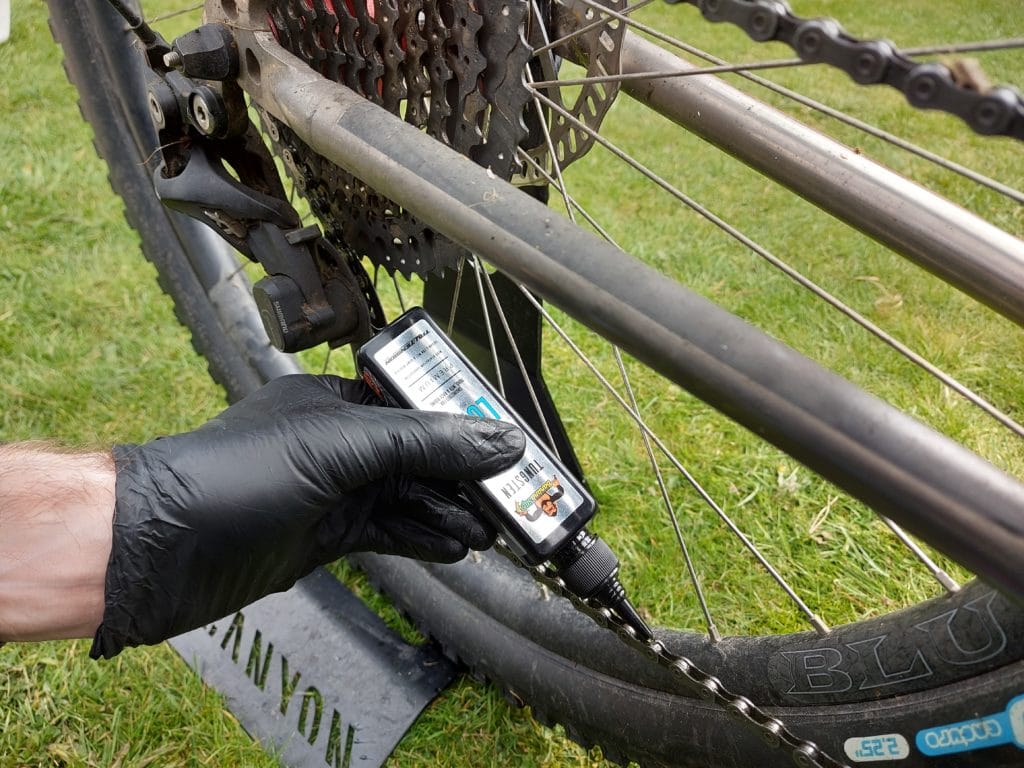
The Tru-Tension Bananaslip all-weather lube was our first guinea-pig to attempt lift-off. As a water-based wax lube, the all-weather variant is both biodegradable and free of harmful solvents.  Starting with a clean chain, application of the lube requires a degree of delicacy to prevent excessive run-off. If your chain is wet, or still holding traces of your old lube then the Tru-Tension won’t adhere as well. It takes a few minutes for the lube to dry so you have to be patient before hitting the trails, better still plan ahead and apply it the night before! It sets with a light grey film. In use the all-weather lube resists picking up excessive dust and proved pretty resilient to puddles and water splashes. Inevitably heavy rain takes its toll after an hour or two and it’s difficult to get the lube to set in those conditions.

Tru-Tension Bananaslip chain application.

The all-weather lube sets as a light grey film

Going bananas!

Both the Tru-Tension all-weather & wet lubes have a Gorilla graphic with the title BananaSlip. The wet lube however goes one step further by actually smelling of bananas! I’m happy to report that this didn’t lead to any Planet of the Apes experiences when out on the trail. Whilst it also contains tungsten, the wet-lube is a very different product compared to its all-weather counterpart. Instead of being a water-based wax emulsion it is a more traditional oil. When applied you can see just how tenacious it is as the oil creates elastic strings as it sticks to the jockey wheels and chain. Subsequently there is very little that runs or flicks off where you don’t want it to.

Tru-Tension Bananaslip

Sticky string, no fling!

The wet lube of course picks up where the all-weather leaves off. If you’re heading out somewhere with wet & boggy terrain or you’re expecting rain you won’t be disappointed. Inevitably it does pick up more dirt, but then there’s more dirt flying about in these conditions. When it does finally give in to the elements the wet lube is sufficiently viscous to allow successful reapplication as opposed to dripping straight off. Unlike the all-weather lube, it’s not so fussy about chain condition so if you need to lend a drop to a friend it’ll mix pretty well with whatever remains on their chain.

Tru-Tension Bananaslip chain application

Hmm, smells of bananas!

Summary

Hand on heart, without a testbed and a series of control bikes, it’s impossible to say whether the addition of tungsten provides any benefit over a standard lube. We can say however that over a series of rides in some pretty grim conditions, the Tru-Tension Bananaslip lubes performed brilliantly. Between the pair of them, whatever the UK weather throws at you, they’ve got it covered! At £10 for a 50ml bottle (for both varieties) they are at the premium end of the market. The lack of dirt collected and tenacity go some way to justify the price.

Monday, 23 March 2020

Review: Shimano MT-7 SPD Shoes


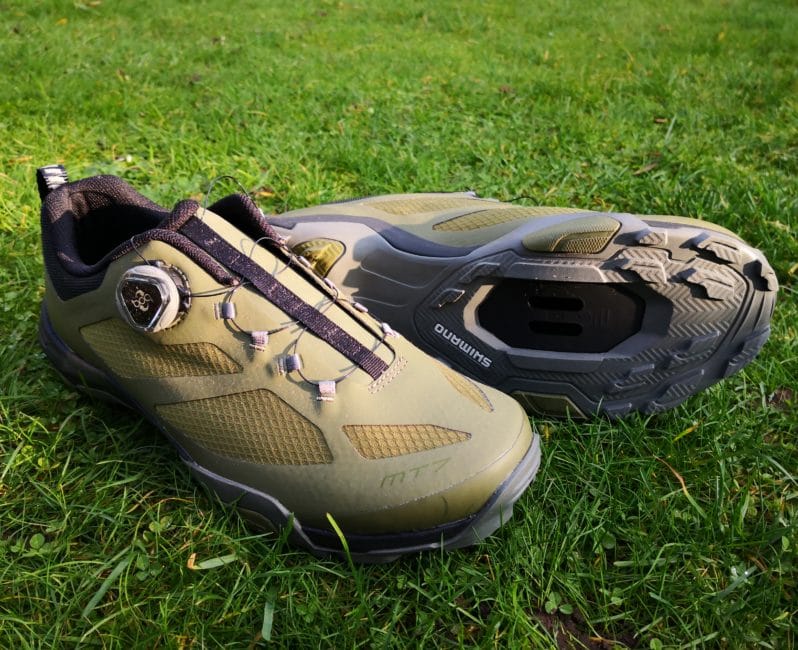
Shimano MT-7

Where angels fear to tread

Fearing my old shoes wouldn’t last the duration of the Atlas Mountain Race (see my ride-report HERE), I went looking for replacements. I had a list of criteria that I knew would be tricky to meet. Stiff enough for efficient pedalling, but also comfy for when the inevitable hike-a-bike reared its ugly head. I also wanted a grippy tread pattern and decent ventilation for the (hopefully!) warm weather. These simple requirements instantly ruled out a huge swathe of the options out there, neither stiff XC racing disco slippers nor bulky enduro skate shoes would be ideal.

What are the options?

Shimano’s MT (Mountain Touring) range looked like they might be the the third way. Shimano’s MT rage consists of the the MT3 (Lace up & perforated upper), MT5 (Speed-laces & mesh upper) and these MT7 with a mesh/TPU(Thermoplastic polyurethane) upper and boa system for retention. There is also an MT7-GTX with a Gore-Tex liner, but I’m not convinced at how effective that might be on a low-cut shoe.

Shimano MT-7

Unboxing

Out of the box the first impressions are of a trail-running shoe that happens to have cleat slots. The sole has chunky aggressive tread, and to my delight, it’s made up of separate lugs. Quite a few shoes have lugs that are joined together which tends to reduce their effectiveness. The sole also has a grippy-rubber feel, totally different to the hard plastic tread of the DHB Dorica Shoes that are fine in mud but struggle on smooth or wet rock.

Regarding fit, the MT7 are the same size as my usual in Shimano shoes. Initially they did feel a touch tight but strangely as I tightened the BOA it actually seem to reduce tightness around my toes! Obviously, they feel stiffer than non-riding shoes but not so much that you’d begin to dread wearing them day in, day out, for a week. The cleats are installed in the same way as you would with any other SPD compatible shoe.

On the bike

Despite the wider running shoe style I didn’t find the sole rubbed the cranks or stays and the chunky tread didn’t interfere with clipping in.  The MT7 have a sole-stiffness rating of 4 on Shimano’s scale. To put this in context, their top road racing shoe is a 12 and their flat-pedal mountain bike shoes are a 2. While they obviously lack that feeling of urgency that a carbon-soled race shoe, I didn’t feel like I was pottering along in a pair of deck shoes.

Sole destroying

In the run up to the AMR the weather was ghastly so wearing mesh-upper shoes was a non-starter. Apart from a couple of dry rides to check the cleat position, I broke them in by simply wearing them as everyday shoes. Aside from the inevitable grit-crunching the MT7s were fine in this role. In the 25-30+° temperatures of Morocco the mesh kept my feet comfortable. When there was a stiff breeze I could even feel it through the shoes! After a week (1150km) of riding I had no complaints about the MT7s. There were no aches from pedalling, they gripped when hike-a-biking and my vague fear that the BOA might jam with dust proved unfounded. The initial feelings of tightness also went as the shoes developed a bit of give during this extended use.

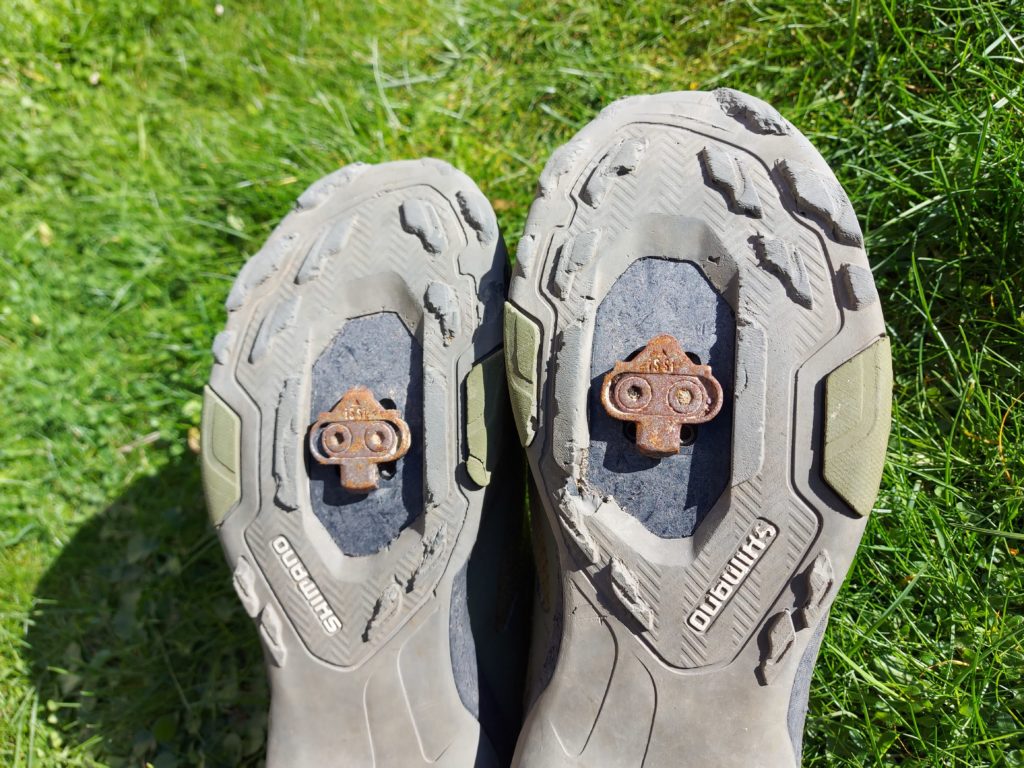
Soft tread on Shimano MT-7

The downside to soft tread, excessive wear and chunks breaking off!

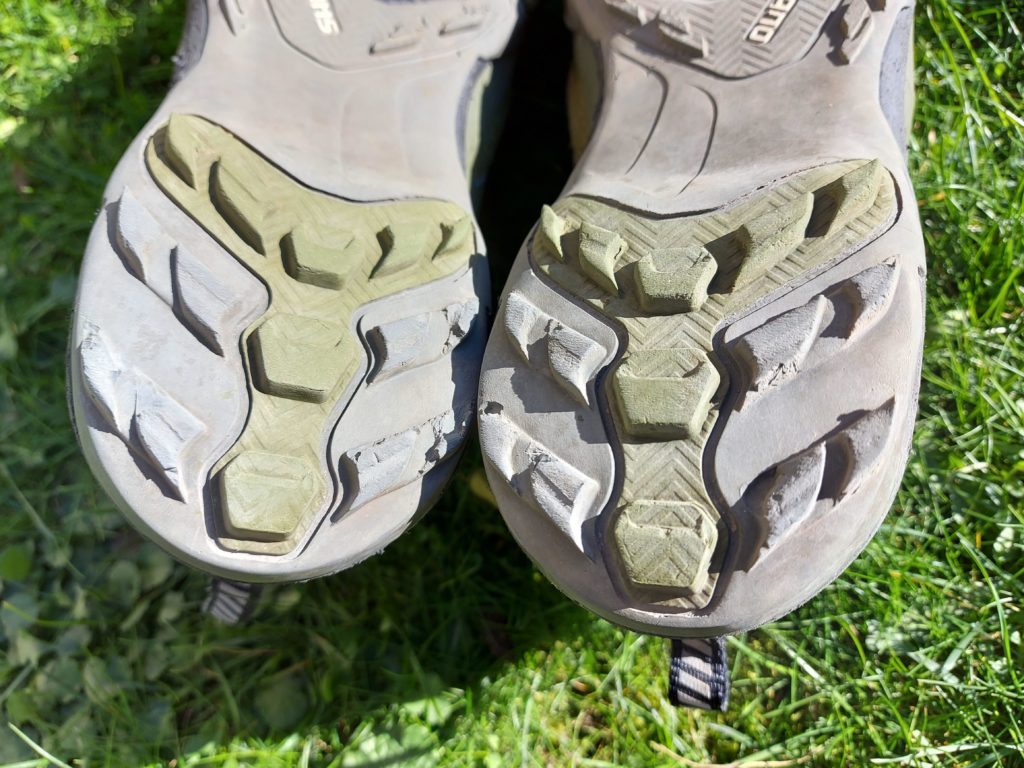
My one real complaint about the Shimano MT-7s only became apparent on my return. With 170hrs of riding and bivi-ing in the same socks (sorry!) the MT7s smelled really bad! As I cleaned them for the after pictures (I know, ruining the dusty patina, but they were too awful to leave!) it became apparent that the sole had taken a battering. The uppers (that I saw every day!) have the odd scuff but otherwise have scrubbed up like new. The sole however has visibly worn down and several of the lugs are missing or soon to depart the shoe! This is a serious black mark against what are otherwise brilliant footwear.

Tired looking soles

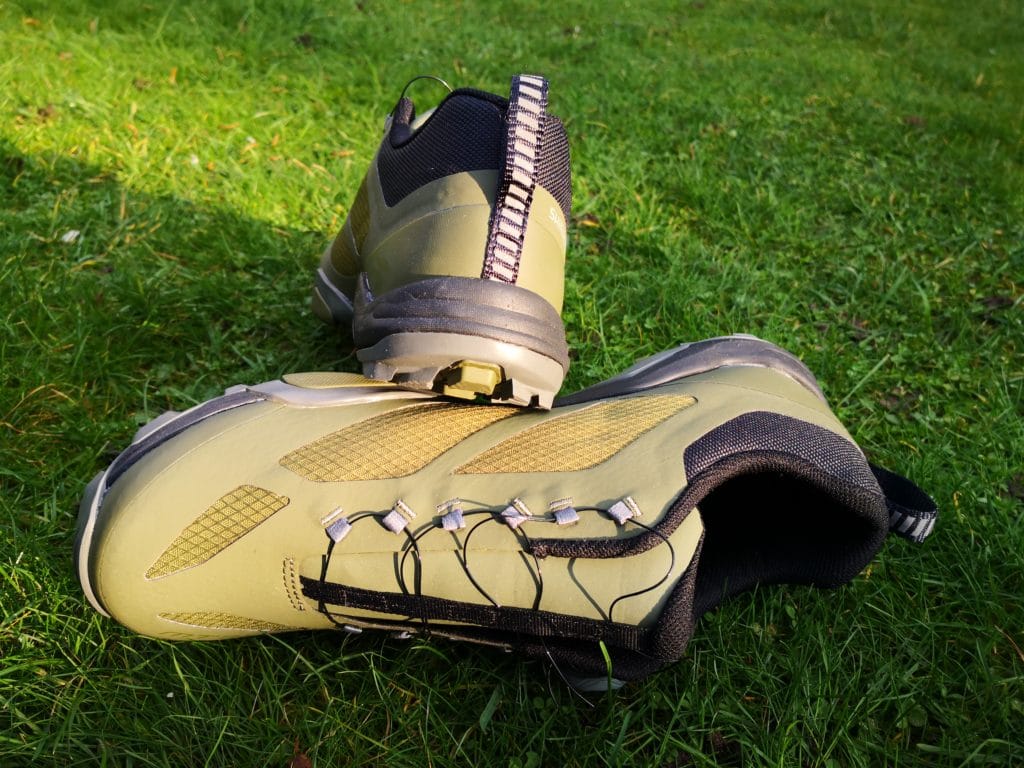
The Shimano MT-7 heel tread fared much better

Summary

This is where things get tricky. On one hand (foot?) the Shimano MT-7 are comfortable, grippy and all you might want in a bikepacking shoe. On the other, another week of rocky ITT riding could see considerably more of the tread falling off! Because of this, at their full RRP I might struggle to recommend the MT7s. Shop around and you can probably find a pair discounted that would make the sole’s short lifespan more bearable. The MT7 has been updated for 2020 but the changes seem restricted to the upper, the tread pattern (and the rubber compound?) remain unchanged.

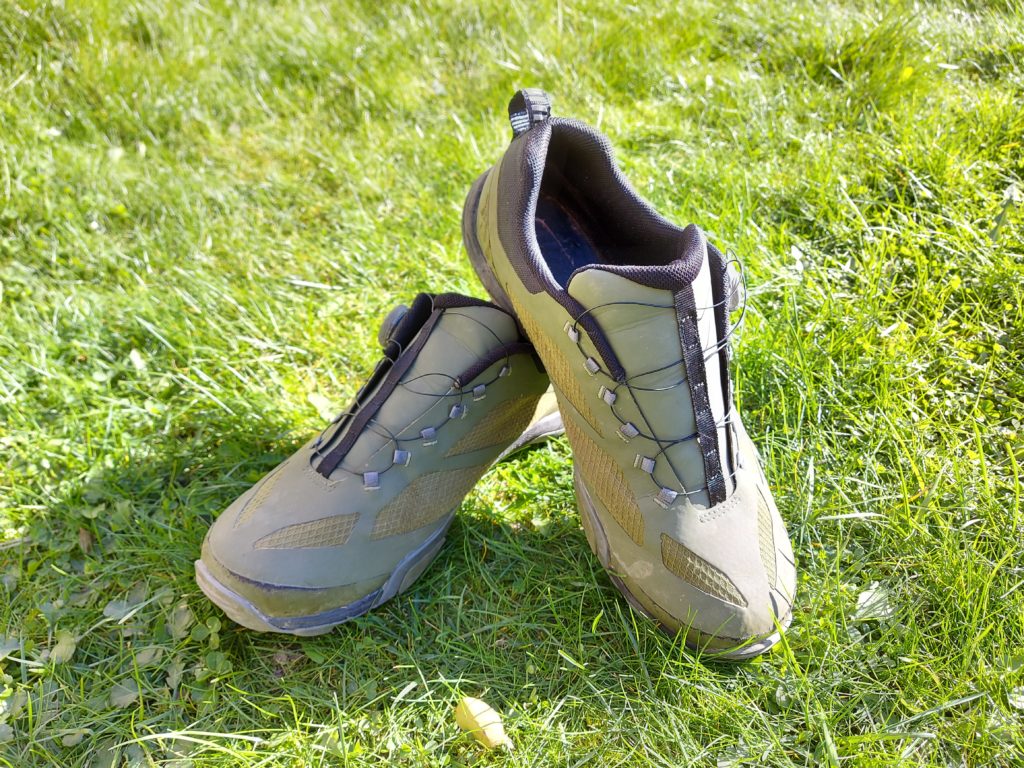
Shimano MT-7

750 miles later, the uppers of the Shimano MT-7 are fine…